Coral background

Showing posts with label Sex. Show all posts

Friday, April 27, 2012

Real Marriage Nuggets O' Wisdom

As you, loyal follower, are probably aware of, I went to the Real Marriage conference with my fiance and two wonderful friends this past weekend. It was awesome.

Prior to the conference, I listened to some of the RM sermons as well as read parts of the book, so some of the information was the same, but let's be real, Mark Driscoll is pretty much hilarious so hearing the same joke twice was fine by me. Most of the wisdom I felt like I gained was from Grace, Mark's wife, during the Q&A sessions.

Here are some wisdom nugs from the conference:

Nugget 1: There are 3 kinds of marriages:
  1. Back-to-back: back to back marriages aren't good, in fact, they're kind of awful. Generally couples with this type of marriage have separate activities, separate beds, separate bank accounts, etc. They don't even really enjoy each other, and they sure as heck aren't friends.
  2. Shoulder-to-shoulder: this kind of marriage is your run-of-the-mill, not too shabby (but not too great) marriage. These couples are task oriented. They're focused on ministry, children, other family members, etc. all before their spouse. This is the life-happened-and-I-woke-up-fifteen-years-later-to-realize-I-didn't-know-my-spouse kinda marriage. This is the most easy to fall into marriage. Ultimately an idol is holding this type of marriage together, and often when that idol is removed, the spouses go their separate ways.
  3. Face-to-face: In a face-to-face marriage, the husband and wife are friends. They are constantly growing in their friendship with Jesus and their friendship with each other. (That's what I'm talkin' bout.) 
 Nugget 2: ask good questions
  • "How are you doing?" is a face-to-face question
  • "What are you doing?" is a shoulder-to-shoulder question
Nugget 3: sanctification
"A spouse doesn't change you, they reveal you." Marriage is sanctifying. Relationships in general are. (Aaaamen to that.)
They used an analogy of two cups, one representing each spouse. Your spouse doesn't determine what's in the cup or change what's in the cup, but they can bump against your cup and see what comes out. (Can you say, "convicting?")

Nugget 4: Marriage gets better or it gets bitter.
To borrow the words of my pastor's wife, you aren't "dealt" a good marriage or a bad marriage. Its a dynamic relationship that you work on together.

Nugget 5: how to fight
Dr. John Gottman, a marriage researcher, can predict (with 91% accuracy) whether or not couples will get a divorce based on these four factors during conflict:
  1. Criticism that attacks the person not the problem. (a.k.a. "You always do this!" or "You never do that!")
  2. Contempt that is rooted in disgust. This manifests itself in a parental tone.
  3. Defensiveness where the guilty person refuses to repent.
  4. Stonewalling (where one person shuts down or walks away)
Nugget 6: sin or mistake?
Agree to ground rules before fighting: Has your spouse committed a sin or simply made a mistake? 

Nugget 7: conflict isn't bad because it's real, heartfelt, and sanctifying
"If you never fight, you probably aren't having heartfelt conversations that often lead to disagreement." (Real Marriage)

I didn't even get to half of the little bits of wisdom I took away from the weekend because there were lots! I know Mark and Grace have gotten a lot of flack for their book. I know every Christian doesn't get warm and fuzzy insides when they hear the name "Mark Driscoll." But their book isn't a hard and fast rule book that's all about sex (in fact, only half the book is about sex). It's got good principles for friendship, and more specifically, the most intimate friendship - marriage!

You can listen to the Real Marriage series here and purchase the book here!

Tuesday, April 24, 2012

A Pastor's Perspective on Birth Control

My godbrother contacted me about my first post about birth control, which really got the ball rolling on me wanting to write about it more. Jonathan is super wise and knowledgeable on lots of things, including birth control! He is an associate pastor at my home church, First Baptist Church of Welcome, and often counsels couples on this subject. Let's hear it for my first ever guest post and Jonathan! You can access the original post, which is presented verbatim on his personal blog. (drumrolllll...)

I am going to try to put in as few words as possible some helpful thoughts on birth control, to add to the discussion taking place, and I am very honored to do so.  Many of you will see this as part of Liz Nicholson's blog, which you can access here.  I am going to be trying to build off of some of the things that she has said in this discussion.

My wife and I have walked through most of the methods listed below, and have had to at times repent of either our ignorance, or trusting poor information given to us about how these things worked.  Often those who work in the offices that prescribe these medications do not have a full understanding of how they work, or a biblical definition of life.

Biblical Picture:

The link that Liz posted to Mark Driscoll's sermon is an excellent discussion of a lot of the theological issues surrounding birth control.  You can read the transcript more quickly than listen to the sermon if you are crunched on time, but it is worth a read if these topics have interested you.  He deals with a lot of the misconceptions about birth control that people come to by misunderstanding biblical stories like Onan, and commissions like "be fruitful and multiply."

He also deals very effectively with legalism, something that can be at the center of this issue as much as a concern for life. How you plan your family is a very important discussion.  It is sinful to be so trite with bringing life into the world that you do not adequately prepare for supporting a child/children once they are here.  Check Driscoll's sermon for a helpful discussion of this.

I want to hit quickly on 2 biblical passages that are at the center of this discussion.

1. Psalm 139, among several others like it, speak clearly of life which exists in the womb from the very beginning.  The medical community tends to define life at implantation (when the egg has implanted into the uteran wall), versus conception (when an egg has been fertilized).  This is not an effective definition logically (simply geography, not substance), or biblically.  David writes of God that he "saw" his "unformed substance", and that his "frame was not hidden from You."  Much of the Psalm is a declaration of hidden life in the womb.  So one of the major questions in birth control is when life begins.  Scripture points to this not being a question of trimesters, but from the very beginning.

2. Genesis 3:16. The Lord says to Eve that he will "greatly increase (her/all women's) pains in childbearing."  I don't believe that this statement only meant labor pains.  Human beings are incredibly inefficient at reproduction, and medical science shows that at least 50% of fertilized eggs (with no interference from BC or otherwise) miscarry.  Many are so early that it is not detectable for the mother, others occur later during the process.  Too many couples, including my own household have faced the pain of seeing an image with no heartbeat, and wondering what could have been done to prevent it.  Feeling the hopelessness of the curse from Genesis 3 in the midst of miscarriages, birth defects, infertility, and on and on the list goes.

*Incidentally, we know that Adam and Eve were not in the garden very long before their sin because Cain is not born until after they were expelled, and there would have been no complications in their fertility before.

Medicinal Birth Control:

Much has been given about NFP (Natural Family Planning), and Liz has written very effectively on that.  I would agree with what she has said, but also add a word of warning to those who practice it that they had better be prepared for the possibility of children, since NFP is based on a number of different hormonal signs and circumstances that can vary, be inconsistent, or be unpredictable.  For some couples it is easier than others, because some women's bodies are easier to read than others, but to the married couple who cannot support children for any number of reasons, be careful in banking on NFP by itself.  Even the average insured couple can plan on paying between 5-15 thousand dollars for a baby just to be born, let alone caring for it and providing for it.

In the rest of the discussion, for the following medicinal forms, the central question is "how do they work?"  Within that question, is whether these devices "prevent" conception (fertilization), or whether they are designed to destroy a fertilized egg (these are often referred to as abortifacients).

"The Pill" - Often referred to by simply that name, this is one of the most common forms of medicinal birth controls.  The Pill is designed in either pill form, or inserts such as the "Nuva Ring."  A certain amount of hormones are released, to essentially fool the woman's body into believing she is pregnant.  When her body believes she is pregnant, the hope is that no eggs will be released, and thereby no fertilization will take place. The more research that is done on the pill, the less indictment there seems to be for the pill being abortifacient.  That is why I always try to point people towards books like the ones below, done by William Cutrer, a pastor, practicing OBGYN, and Seminary professor.  His research is more up to date than men like Alcorn (who I highly respect, though his writing on birth control is often where Christians get their somewhat dated information).  The Pill seems to be a question mark at best, and a conscience decision for anyone.  It is not a sin issue for someone to take or not take this based on what we know.  The Pill is also available in what is called a "progesterone only" form, where the only effects of it are suppressed ovulation (keeping the woman from releasing an egg), and not hardening of the uteran wall.

Intrauterine Devices (IUDs) - An intrauterine device is inserted and meant to be left in for a period of up to (if I remember right) around 3 years.  It is sold in the USA under the name "Mirena."  The research on IUDs seems to show that what they do is not prevent fertilization (though they sometimes claim to), but rather prevent the egg from attaching.  They are very effective at preventing pregnancies (even though they do so unethically) which is why they are growing in popularity in the USA.  They have been around for several decades elsewhere in the world.  Eggs can still be resilient, and implant in very hostile environments.  If an egg implants with an IUD (IUDs still only have somewhere around a 95% success rate at preventing pregnancy) it will be a tubal pregnancy (in the fallopian tubes) which is unsustainable, or a uterine pregnancy which cannot be sustained because of the presence of the IUD.  Leaving in, or removing the IUD will destroy the baby.

Morning After Pill - This pill and some others that work similarly are forms of birth control that are given orally after intercourse has taken place.  It is intended to flush out any fertilized egg, and is the most blatantly abortifacient form of birth control that there is.


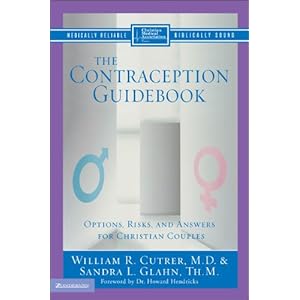
One subject which I have not dealt with are the ethical concerns of different fertility treatments that are out there, which have many similar problems that Christians need to educate themselves on before attempting them as to the positives and negatives of different options.  I would refer anyone wanting more information on the ethical questions of the issues surrounding infertility to The Infertility Companion by William Cutrer.  Anyone who would like more information on contraception, I would encourage you to check out Cutrer's The Contraception Guidebook.  Both are well done and great reads.  Sadly there are few well-done and current Christian books on either subject.

Monday, April 23, 2012

Monday Musings: Real Marriage Tour!

For my birthday, my sweet fiance got me tickets (+ the greatest popcorn maker ever) to hear Mark and Grace Driscoll speak at their Real Marriage conference in Lynchburg, VA!
We have really great friends that came too, which made the weekend twice as fun and laughter-filled! Thanks for coming, TJ & Lauren!

Once again, this weekend was full of adult-like moments. I purchased (read: my daddy purchased) two hotel rooms. I checked into a hotel. By myself. What is this world coming to?! I might as well have a 401k. Lauren and I had to balance out being "real" adults by staying up ridiculously late having pillow talk, 7th-grade-sleepover-style.
It was super fun and insightful! I am so thankful we received some wise and practical counsel to prep for actually being married! Woohoo!
 "I just loooove the way Mark Driscoll speaks to men." (If you haven't seen Sh*tuff Christian Girls Say, run to YouTube. Like, now.)
We ended the weekend by eating sushi - which was a first for Lauren! - and watching The Notebook, per TJ's request.
Unsure, indifferent, and a thumbs-up to sushi in Chapel Hill!
The weekend was overall pretty fantastic. The conference itself was really great! Mark and Grace shared tons of wisdom nuggets, which, never fear, friends, I too will share with you soon! :)

Birth Control: My Own Experience

*Boy discretion is advised* 

Part of the reason I'm so passionate about birth control is the fact that I've taken pretty much everyone in the book. From multiple types of birth control pills to the patch to the ring, I've been on them all at some point. I started taking birth control in middle school strictly to regulate my seriously crazy periods. Up until this past August, I had been on various types of aforementioned hormone-based birth controls since the 7th grade. When I went to my "lady doctor" in the 7th grade, she gave no indication that there were alternatives to the Pill. That being said, I definitely think it was okay for me to be on it. I wasn't having sex, so it was being taken in a strictly medical sense. Taking birth control for regulative and other medical purposes is not a part of my discourse on birth control. I know women who have to be on the Pill because of their struggle with Polycycstic Ovarian Disorder (PCOS). For them it is a medical necessity.

Soooo around my sophomore year of college I started getting more and more curious about how the Pill/hormonal birth controls work. I wrote people who thought the Pill was abortive off as somewhat crazy and kept taking the Pill (once again, for regulative reasons), all the while feeling somewhat convicted about taking it for the future. Around the same time I developed Fibrocycstic Breast Disorder and "needed" to be on birth control (it's really not serious at all and BC is only mildly effective).

Then this past summer I did the City Project, a two month long, super wonderful project through my church in which I got to meet and network with a lot of awesome, godly families. TCP allowed me to learn about birth control from godly women who were both knowledgeable and willing to talk about intimacy/BC and answer my plethora of questions on the subject! Many of them did Natural Family Planning along with another barrier contraceptive (usually condoms) for fertile times of the month.

Late this summer I decided to go off the Pill as somewhat of an experiment to see what my body would do. Praise the Lord my body has finally regulated itself! I'm so thankful! After doing a little research about NFP, I can now easily identify when I'm fertile and when I'm not. I love knowing what is going on with my body & being able to celebrate how God designed my body seriously every month! If you're one of my close girl friends, you can attest to this, because I seriously talk about it every month. Sorry I'm not sorry.

For me, NFP isn't the "Christian option." It is, however, a way of praising God by capitalizing on his design for the female body. The design of the female body is totally praiseworthy! Plus, if I can not take a pill every day for any ailment/issue, I'm gonna take that option! Alsoooo, having no sexual appetite (which is a side effect of hormonal based BC) is kinda the last thing on earth I want to happen when I get married. The reason I want to do NFP isn't because I'm a super-Christian (whatever that means...) or because I think taking the Pill is crazy sinful, it's really a culmination of celebrating God's design of both the female body and sex, and knowing how my body works and reacts to hormonal birth control.

This is just my own experience, and every one is totally different in terms of convictions and physiological responses. Pray about it. Check out resources. Know your own body. Then make a decision about it, making sure it aligns with Scripture!

Friday, April 20, 2012

Birth Control: Let's Do This.

First of all, thanks to everyone who read/commented/liked my blog post about NFP and the Pill. I was totally encouraged, excited, and edified (alliteration!) by the response it received. Some of the feedback I received prompted me to write another (errr multiple) post(s) in response for the sake of clarity.

I definitely wasn't trying to make any blanket statements about how only real Christians use Natural Family Planning and all them heathens on the birth controls are goin' to hell. Not at all. My intentions were to simply get the ball rolling for 1) women to think about birth control and their bodies, 2) explain my own personal convictions, and 3) give resources for both men and women to check out, like Mark Driscoll's balanced, systematic sermon on birth control and Sharon Miller's article about the female body and hospitality. Both of these resources are fantastic (as well as many other of Miller's articles, as she and her husband practice NFP); by presenting them, I assumed readers who wanted further clarification would seek out those resources. Buuttt you know what they say about assuming things.

So, I'm going to do a series on birth control/the female body! Woohoo! Posts will range from theological to ethical to down-right practical (boy-discretion-advised). And I'm going to feature my first ever guest blogger! And I'm hoping my sweet fiance will weigh in on all this girl talk, because in reality its not all girl talk - its a subject men need to be well-versed in too!

I'm going to try to keep it real without getting too detailed/technical. I'm a TA for Biology 101 here at UNC, so I have to stand up in front of dozens of students and talk about all things sexual. At first, the mention of the reproduction chapter made me blush, but now I can pretty much stand in front of anybody and talk about the path sperm take and say "gonads" without giggling. (Let's be real, people, that's a feat.)

Hooray for awkward processes! Let's do this.